Saturday, June 30, 2012

The boredom of training

This article is similar to one I wrote a few weeks back...but slightly different and for a different audience on www.firstoffthebike.com


When you’re out training you often find yourself looking for telltale signs for how you are progressing, and how training is going. Things like HR, avg pace, wattages, time splits, weekly totals, and even how well you keep up with training partners all provides great feedback and measurement. But there is perhaps another sign that training is going well...when the repetition of training is almost boring. When the routine seems like it is non-stop and your ingrained memory associates each day with particular sessions. This can be boring, but it is also a great sign you’re going well...but it’s not obvious.

One of the top goals for training in any sport is consistency, because without it you’ll be chasing your tail trying to make progress - inconsistency interrupts the best laid plans, and is frustrating. Athletes strive for consistency not just in training, but in racing also...to be consistently good, on demand. Coaches also love consistency since it allows a strategic plan to be applied for individual athletes, to monitor their adaptation and progress, and fine tune training on a session by sessions basis.

But the thing is, consistency can be boring, however in this case boring is good because consistency is good.

There’s other things about training that are boring, like using the same venues, needing to bring the same equipment, doing the same warm-up, the same post session stretching and even training with the same people can be boring!! But each of these things is also a great strength in a good training program.

Using the same venues is great because it allows measurement and comparison from month to month in some key sessions (but not all the time). Using the same equipment has familiarity, and prepares you well for when you’ll use the same – or similar – equipment in competition. Doing the same warm-up reminds your body and mind what is coming up, and what to be ready for, plus, when your routine is so familiar that do it without thinking then you’re more likely to notice if something feels different to normal...which is really important. Doing the same post session cool down and stretching is much the same...they form important parts of your training session.

Training with the same people can be the greatest influence on your performance of all. Not only are they part of your support network – and vice-versa – they are also vital for motivation, feedback, inspiration and as a yardstick for performance. Training partners become like family...and you’d miss them if they weren’t there.

These and so many other things can make training boring, but without them training would still be boring...and probably without the same progression or satisfaction. After all, nothing worthwhile comes easily.

Having said all that, when training is boring it is also an indicator that perhaps you should look to change something, to refresh the stimulus and challenge so you make progress again. Everyone will plateau at some time, when boredom with the process can be symptom, and this can be a great sign that a change is needed. If you keep doing the same thing, you’ll get the same outcome. Training progression should be built into your program to avoid staleness, but there will always be aspects of repetition which is just how it is.

Another good thing about the boredom and repetition in training is that it allows you time to think...about what and how you’re doing, what’s coming up, your dreams and ambitions and even what you’re having for dinner that night. Far from being boring, training can be a wonderful to think outside the square and immerse yourself in your own thoughts...which is a special opportunity when life these days goes by so fast.

There are many reasons for be glad when training is boring, because it usually means it is going well, and when you consider an alternative is that you might be sick or injured and long to be bored by continuous training, then enjoy what it offers and see training boredom as a positive.

Saturday, June 23, 2012

Edward Ross Maffett

He finally arrived on Friday 22nd June, after some reluctance, but now he's here, he's perfect. I could write so much about it all, but will post a few photos instead.


Saturday, June 16, 2012

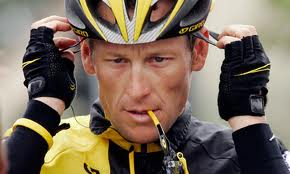
Lance Armstrong - updated.

Here is an article I've just written for www.firstoffthebike.com  I've updated it after the WTC decision just after I posted it.

Is there any more polarising person in sport than Lance Armstrong? Some people love him. Some people hate him. Some people love and hate him at the same time!! His story is powerful and defining...which ever story of his life you choose to pay attention to. Whether it is recovery from cancer, winning seven Tour de France titles, his work with the Lance Armstrong Foundation, or his recent return to triathlons, he grabs and demands attention both on and off the track through strong deeds, and equally strong personality.

This week another entry was made into a less glamorous chapter of his life, that being the one titled Performance Enhancing Drugs (PED). It is perfect storm involving many aspects – and timing – that are conspiring to force this topic into the headlines of mainstream media, a place where the amount of mud thrown around inevitably leads to lasting stains, even on the usually resilient Armstrong.

There are many aspects to this story – his past life as a pro cyclist in an era, and team, tainted with the dark mark of PED convictions. Add to this his “squeaky clean” testing record (although absence of positive tests didn’t save Ullrich, Basso, Valverde, Marion Jones & Tim Montgomery), suggestions there may have be systemic covering up occurring, and more. Then there is the story in the context of his return to triathlons, and most importantly, the implications of the WTC policy preventing anyone under investigation (even if they are yet to be charged – as in the Armstrong case) from competing...even when that person is the mega-star athlete Lance Armstrong, who would, in the absence of the current furore, have brought attention to the sport that money can’t buy. Talk about kicking an own goal...

It is important to point out is that Lance has not been charged, and there is a very important process of investigation and hearing that would need to occur before any sanctions are imposed. So at present, Armstrong is innocent. However, you would think that USADA would only be mounting such a case if they thought it would succeed – they have their own budgets and reputations at stake. Armstrong is also not the only person in the new spotlight, with other former (un named) team members and team staff included in the “notice letter”. The case for investigation has been described well in detail elsewhere.

What this story means for triathlons, though, is huge. Rumours of Lance’s “return to his roots” in triathlon abounded for long before he announced it, and even then it was a huge story when he did announce it. Opinions variously oscillated between seeing it as joke, a PR stunt through to conjecture about how he might actually go. His recent performances have replaced the debate with serious concern from established pros about how well he is going...launching a fascinating war of words and mind games between Lance and Macca, two masters of the activity!!!

The impact of his return to triathlons was bought into focus by a deal struck between WTC (who own Ironman) and Lance, contracting him to compete in a series of IM branded events in return for a significant donation to the Lance Armstrong Foundation. It was a nice case of respective back scratching that would benefit the respective interests of each party. A good business deal.

The season to date has proven what a great asset Lance has become to the sport, not just through his impressive performances and associated publicity, but also the level of professionalism he is bringing to his approach, the focus on race tactics with him in game, and the kick in the pants he has delivered to established pros. He is a serious factor, and anticipation for the ultimate shown-down in Kona in October was heading towards fever pitch, with the floated prospect of live TV coverage being the jewel in the crown. His scheduled IM debut in France on 24th June would cap off an amazing comeback...something Lance specialises in.

But all this may have come undone this week, in large part due to WTC’s own anti-drug policy which has borrowed heavily from cycling, with the effect that, in the words of WTC, “Our rules, as stated in the WTC Professional Athlete Agreement and Waiver, dictate an athlete is ineligible to compete during an open investigation.” Uh-oh. Bad luck Lance.

The thing is, the WTC policy is actually out of line with the WADA code, and policies of virtually all sports under the Olympic and federation system umbrella. In taking the strong position they have, they are killing the golden goose for the sport of triathlon. If Lance were competing on the ITU circuit he would still be able to race, with USA Triathlon issuing the statement “Lance Armstrong is currently still eligible to compete in all USA Triathlon-sanctioned races, with the exception of Ironman events as stated earlier by the World Triathlon Corporation.” WTC are paying the price of being a law unto themselves, and now find themselves in quite a pickle.

It seems that some serious head scratching went on at WTC to find a way out of this hole, with one proposition being to change the WTC policy to permit Lance to race. If it were being done for any other athlete than Lance, this might pass as a footnote, but it’s not and it isn’t, and rightly so. Even though WTC own their own game and associated rules, if they were to change them so they meet their KPIs on a strategic investment called Lance Armstrong, it would reek of something. We should remember that WTC is a business, and Lance is now a valuable asset to them, and they needed to act to protect it.

The ensuing argument ranged from emotional to moral, to legal, to pragmatic and the good of the sport...because after all, triathlon is a minority sport and Lance Armstrong is potentially the person who could single-handedly could lift it a rung or two. WTC was stuck between a rock and hard place, dammed if they do, dammed if they don’t change the rule. Plus, timing was critical since in order for the script to play out as planned Lance would be competing in IM France next weekend. The irony is that, ignoring the circumstances that led to this situation, the rule situation is one that Lance can only be observer to...even though he is the central subject of it all. As always, Lance continues to divide opinion!!

As it has turned out, WTC have stood by their rule, leaving it un-changed, which seals the fate of Lance Armstrong...he will not be racing IM races. It is a huge and bold decision, with Armstrong defendants saying he was hard done by, while Armstrong antagonists (and perhaps some fellow pros) saying that the right decision has been made. WTC have come through it all somewhat bruised, but otherwise alive and kicking.

But where one door closes, another opens...perhaps in the shape of Challenge races. Could Lance now set his sights on Challenge Roth, with all the history it has, or any of a number of other non-IM events on the calendar? Lance has often said he doesn’t need a job, he just needs a challenge...and those words could prove prophetic, and mean that we might not see Lance ride off into the triathlon sunset after all. A week is a long time in sport!!

Wednesday, June 13, 2012

Chasing perfection

When you boil it down, sports training and competition is all about trying to have a perfect performance that demonstrates all that you’re capable of. It’s where everything is focused into a fine point that leads to the highest pinnacle you can reach. The satisfaction and accomplishment is (almost) better than anything, and reward for all the preparation you put in.

Once you taste perfection, you want more and you want it now. But perfection is just a fleeting moment, and trying to repeat it – let alone improve it – is hard, which leads to an endless cycle of trying, and trying some more, driven by the dream of feeling perfect again.

In my sports career I can only count a handful of races where I’ve felt close to my perfection. A few of those were triathlons, and a few have been running races…one of which was the 2006 Gold Coast marathon where I ran my PB of 2:32:10hr. I’ve looked back on that many, many times and wondered how I managed to perform at that level, and dreamed of getting close to it again.

This post is about my current project to improve on the relative perfection I experienced that day in this year’s 2012 GC marathon…six years (and so much more) years later. It’s a tough goal at age 42.5 years old…

In trying to improve on that run in 2006, I started by understanding what it was that made it so good, and came up with the following:
  • I came off a huge IM fitness base built up over summer 05/06, culminating in a (disappointing at the time) 9:31hr IM at Port Macquarie in early April 06.
  • I had flawless training over the 10 or so weeks of training between IM and marathon, hitting almost every session and progressing well week on week.
  • I had a really good run at the Great Ocean Rd marathon 6 weeks pre-mara, coming 2nd and clocking 2:38:45hr at the 42.2km timing mat (which I now know to be a bit short). It was the way I ran the race that was really encouraging, progressively building the pace from just before half way.
  • About 4 weeks out I ran 33:45min at the AthsVic 10km, which actually didn’t suggest anything like the marathon I was about to run, but a benchmark nonetheless.
  • In the marathon itself I ran alone from 3km onwards, increasing my pace from 20km, dying a bit in the last 5-6km, but holding it together for 75:36 / 76:34min splits.

The key points amongst those things were:
  • The great fitness base,
  • The consistently good training leading up to race day,
  • Race execution (…although in hindsight I should have saved my surge until 30km+).

Right now I’m focused on the first two points – training. In a race build-up the best you can hope is for training to go to plan, which means good consistency and good progress, and when they do, they often lead to a great performance.

I have some tiered goals for the marathon:
  • A goal – to run a PB of sub-2:32
  • B goal – to run sub-2:35
  • C goal – to run sub-2:40
I might also mention that my A+++ goal is sub-2:30…a dream time!!
 
Based on that, my aim is to be able to run 3:34 min/km for the 42.195km, which will be a time of 2:30:30hr. I’ve figured this pace is a fine line between aggressive and conservative, will set me up for a shot at sub-2:30 if I am having a great, great day, but also should not blow me out too much early on if it’s just an OK day. Running a marathon is like a game of risk and reward; chance and courage…take a chance and have some courage you can pull it off. The trick is how big the chance should be without blowing yourself to pieces.
 
With my goals being purely time based rather than placing, the training strategy was straight forward…train so that I can maintain the target pace for the whole distance. My fitness would need to be specific for this goal, not towards running a fast 5km, 10km or even ½ marathon. I needed to be comfortable running at 3:34 min/km, which would come about through plentiful training at or around this pace.
 
Much like in 2006, I came into this marathon specific phase with a great fitness base from the 6ft Track training over Nov-Mar, with the race cancellation meaning there was no recovery required, allowing me to maximise the period of Apr-Jun (inclusive) for marathon training.
 
As good as the 6ft Track training base was, it was all pretty slow running and it took weeks to get some spring back into my stride. While I needed to get some marathon speed back, I didn’t want to lose the strength endurance from the long 6ft Track training runs, so kept up the 40km+ training runs, regularly clocking 42-45km each Saturday, at a fairly steady / comfortable pace (~3hr marathon pace).
 
The mid-week sessions were where I tried to make progress towards my target marathon speed, with key runs on Tuesday and Thursday. Tuesday was an extended fartlek session of 1-3min surges, while Thursday was more focused on speed over 30-60sec. The hardest part was slotting these sessions in during April where I also raced three times, with each race requiring some days of down-time for recovery. So every second week was compromised from a training point of view, but with each race providing a good fitness boost itself.
 
Those races were:
  • 1-Apr: Run for the Kids (14.38km) - 49:30min, 31st place
  • 15-Apr: Geelong 1/2 marathon (21.1km) - 1:14:31min, 4th place
  • 29-Apr: Marysville to Melbourne team (19.6km trail run + 12.7km run) - 1:20hr + 47min
 
Late-April and into May is where I started making most progress. The Tuesday session morphed into a long interval run, Thursday’s session became shorter and had less emphasis, and Saturday started becoming a long tempo run. Tuesday’s target was to run all intervals at sub-3:30 min/km, and Saturday, with longer tempo segments, was targeted at about marathon pace, although I did make some allowance for running on tired legs in training shoes!!
 
Some Tuesday sessions progressed like this (targeting sub-3:30 min/km):
  • 2 x 3km w/ 3min rest + 6 x 1km w/ 1min rest
  • 2 x 4km w/ 3min rest + 6 x 1km w/ 1min rest
  • 2 x 6km w/ 3min rest + 4 x 1km w/ 1min rest
 
From mid-May the Saturday long run became a little shorter (i.e. less than 40km!!) but started including tempo sections, typically something like this:
 
5.8km warm-up
9km at increasing tempo, avg 3:45-50 min/km
500m easy – incl gel / drink stop
8.2 km (2 x 3-bridges course) at 3:34-38 min/km
500m easy – incl gel / drink stop
9km at 3:35-38 min/km
5.8km easy
 
This added up to 39km in about 2:33-34hr at overall avg pace of about 3:55 min/km, but it was the tempo sections that counted most. These long runs gave me confidence in being able to hold the pace for a long time…the unknown was just how long…
 
Also, throughout May my mileage consistently maxed out (when I wasn’t recovering from a race!!) at 155-160km per week. A basic week looked like this:
 
Mon: AM – 16km easy ~ 1:11-12hr / PM – 7km easy ~32min + 8-10 x 80m strides
Tue: AM – 24-26km long intervals
Wed: AM – 13km easy ~ 59-60min / PM – 13km easy ~ 59-60min + 10 x hill sprints
Thur: AM – 13km easy ~59-60min / PM – 12-13km incl speed intervals
Fri: Rest day!!! Ride to/from work + core strength
Sat: AM – 38-39km tempo
Sun: AM – 17-18km easy ~ 1:15-20hr + 10 x hill sprints
 
Two recent events have also helped to give me some confidence in where my fitness is currently at – the Great Ocean Rd marathon, where although I ran it as a strategically paced race, assured me that my fitness is where I was hoping it would be.
 
The second, bigger confidence booster was the Athletics Victoria 15km road race at Ballarat, where I beat what I thought was an ambitious goal time (51min) by almost 30sec in 50:32min, despite dropping off the pace in the last 2.5km. For much of the race I ran way faster than I have been both training for, and that I thought I could run at. The finish time predicts a 2:32:xxhr marathon on the McMillan running calculator web-site, which I have a history of out performing the longer the race goes…so makes me feel far more confident about my goals.
 
In looking back on training and picking out what I think are/were the most important / beneficial things I’ve done, it is these:
  • Running more.
  • Doing short hill sprints x 1-2 per week.
  • Furthering my strength – tempo running – rather than trying to develop my weakness – speed.
  • Pre-run loosen up routine…especially important for my morning running (5:30-6am starts).
  • Running more.
  • Not running on Fridays.
  • Self-massage.
  • Taking a new supplement from early-May called Extreme Endurance, which coincided with a noticeable improvement in my recovery. I think it might work!!
  • Running more.
 
Some things I would (like to) have done a bit differently:
  • Get more sleep!!! I needed about 25-30min from waking up to starting running in early morning, which meant alarm times of 5-5:30am…ugh!!!
  • More massage and muscle maintenance / loosening up work.
  • Perhaps fewer races to allow more than 3 weeks in a row of solid training…but I did use races to conclude a training build-up block, and for recovery afterwards.
  • Perhaps 2-3 more Tuesday long interval sessions and 1-2 more Saturday long tempo runs…although races did substitute for some of these sessions.
  • A little more work on my speed, mainly for the biomechanical efficiency, smoothness and rhythm it provides than the actual speed benefit.
 
But so much for training, as it is on race day that the real test comes, when I need to “do the do” and execute the race I’ve trained for. I’ll write a separate post about that a little closer to the race…I need to think through my strategy a little more.

Saturday, June 9, 2012

Boring Running

I've recently started writing some aritcles for New Breed Running (http://www.newbreedrunning.com.au/) ...here is another...

While I was running the other day, as usual I was in a world of my own thoughts covering everything from world peace to what we were having for dinner that night. It's one of the wonderful things about the simplicity of running, that you can drift off in a world of your own as your feet pound the ground, using it for the space it offers your mind to wander.

As I thought a little more, it occurred that if it wasn't for my mind wandering like it was then I would actually be quite bored, like those long car trips as a kid when all you want to know is "are we there yet, are there yet?". For running on its own can be a bit dull if you let it be, which is a common complaint from people who don't "get it" about the beauty of the sport. I used to always wonder why it is they couldn't see running the way I do, for the great feeling it gives during and after, the freedom to explore, and the health and fitness benefits.

Now I know why!!

Of course, my thinking didn't stop there because I thought even more about why boring running can be good, and the list was endless. It can be boring because you are fit and are gliding over the ground with ease, or because you're not injured and being tormented by the fear of having to stop, or simply because you're contented with the general state of things in your life. I find that being bored is most common when there is no dominant concern on your mind…and in running, that is a good thing because it allows you think and ponder freely. And that is where the purity and simplicity of running exists.

Running can also be boring when training is going well, and you're "ticking over" the miles day-in, day-out, week-in, week-out. The repetition of training can be boring, but when you think that an alternative may be injury, sickness or otherwise then I'd that monotony of training any day! In this case, boring running is a great sign…but might also be a little indicator that maybe you need to mix things up a little. But not too much or too suddenly.

My relaxed, easy (and boring) run came to an end and yet I wasn't really quite ready to stop since I had so much more to think about. Perhaps I should write a few notes and re-read them before my next run so I could pick up from where I'd left off? I didn't do that because I know from other times that my next run will have it's own world of thoughts to pass those miles that might otherwise be potentially boring. Yes, boring running is OK with me!!

Wednesday, June 6, 2012

Winter Training Goals

I think it's safe to say that winter is generally not the most fun time to train. It's colder, darker, wetter…altogether less motivating. But we in Australia should be glad we don't get snow in the streets, like our northern-hemisphere cousins (although I understand it gets close in Canberra & Hobart!!).

Since most of us are constrained with our available training time - morning and/or evening - we must just suffer through whatever the prevailing conditions are at the time if we want to get anything done. All this means the winter is often seen as somewhat of a time to just maintain fitness while we longingly wait for better seasons ahead.

It doesn't need to be like this. While we can't change the weather we can change our goals for winter training, and also change the way we go about training to achieve them…you might as well make training productive if you're making the effort to get out there.

Having winter training goals might sound contrary to keeping it simple, as I've written in previously, and to an extent it is. But as I pointed out then, you can have training goals while keeping it simple…I’m talking about relatively simple goals, which can be worked into your sessions with ease.

The goals I’d suggest for winter are ones that will prepare you for the next phase of training as you approach spring. Specifically, here is my list of winter training goals:
* Aerobic development
* Speed & power
* Core strength & stability

At first glance these look like an odd mix of training goals, but let me explain more why each is there.

Aerobic development
This is fundamental to endurance sports for all kinds of physiological reasons. Your aerobic capacity is something you should never stop working on, and does not mean just noodling around, going easy. Your aerobic range of training is wide, where even half marathon running effort or Olympic Distance bike leg effort is mostly aerobic. While I don’t suggest you aim for those effort levels, aerobic development does provide quite a range of intensity to work within, so mix up your training sessions so they’re not just a long, single pace efforts. Focusing on aerobic development is a no brainer.

Speed & power
This is also fundamental to endurance sports performance, but almost at the opposite end of the spectrum to aerobic development. It is fundamental because every performance is underpinned by how fast you can move / what power you can generate, combined with your endurance to maintain it. Be clear that speed & power are a relative measures for your capabilities, and are closely linked with your efficiency, rhythm and coordination of movement at high(er) speed and power, which is a shared goal of speed & power development. Developing this involves only short efforts – from 8sec up to 30sec – done 6-8 times once or twice a week on flat or hills, within an otherwise easy session. Of course, you can take it further…this is just a minimum. Also, although short, these efforts are high stress on your muscles and connective tissues, so approach them very gradually and carefully.

Core strength & stability
This is the capability to hold your body in place during performance, without which you waste an awful lot of energy through excess/uncontrolled body movement. This is both a skill and a trained capability, firstly to identify and recognise your own biomechanical movements, their role / impact on your performance in each respective sport, and develop the skill to control these movements. Then you have the trained capability to maintain control of your movement / form during training and competition, especially under fatigue. So developing your core strength & stability over winter is vital in having a platform to build your fitness on throughout the rest of the year. It only takes 20-30min, 2 to 3 times a week to make great gains.

So these are the three top-level training goals I would include in a winter training program for an athlete with a summer season. Of course, they should be part of a strategically planned program, which can also meet the KISS principles, and prepare you well for a more specific build phase. Above all, make sure training is enjoyable, and not a drag.

Monday, May 21, 2012

The next crop of IM stars

Talent identification (TID) in triathlon is a tricky thing - do you develop all-round athletes from a young age, or "cherry pick" more mature athletes with promise? Regardless, it takes athletes with great talent to really succeed in triathlons, not just because they need to be able to swim, ride and run fast, but also handle the necessary volume of training and submit to being under the control of your national federation. Life as an elite triathlete in hard work and all-consuming.

The use of TID has mostly been for the development of ITU athletes, and is most often done via national federations whose tentacles spread far into the community pool of potential candidates. Once they are identified they will usually be sucked into the vortex of programs, systems and more, with the goal of turning the potential into reality. Some succeed, some get burned out and some get disillusioned. Then some others 'graduate' from ITU racing, which is what this article is about.

In long course and IM racing TID doesn't exist in the same sense as in ITU because LC and IM racing sits outside of national federations core business for which it is funded, despite the fact that many members focus solely on this format. So the TID that does occur stems from smaller enclaves of coaching groups, or "teams", or through the individual determination of athletes - you're pretty much on your own in the LC and IM world. The upside is the freedom of choice in terms of training, racing, sponsorships and more, where many of these pro triathletes earn more through sponsorship than prize money. There is arguably more earning potential in LC and IM racing for the majority of athletes.

So where do you look in seeking out the next stars of LC and IM racing? It's too demanding and the time frame for development is too long to be scouring junior ranks to train them up. Trying to "cherry pick" mature athletes perhaps from a single-sport background is fraught with uncertainty. The best age group athletes may make a successful leap to elite, but they would be few and far between, and usually only with modest success. So where do LC and IM stars come from?

The simple answer is from 'graduates' of ITU racing, or younger ITU athletes who realise they are on the fringe of success and see LC and IM racing as a more fertile ground. Specifically, in the 1-3 years after the London Olympics I am sure there will be a flood of ITU athletes crossing over to LC and IM racing - some have already indicated as much, such a Brad Kahlefeldt and Simon Whitfield. Methinks that the current crop of LC and IM athletes should be very afraid!!!

History has already seen the success that good ITU (or short course) athletes have had in LC/IM racing. Mark Allen and Scott Molina are prime examples, as are Erin Baker and Karen Smyers. Moving the timeline forward a little there is Simon Lessing, Michelle Jones and in current racing Chris McCormack, Rasmus Henning, Mirinda Carfrae, and the list goes on. All these athletes experienced success at shorter events before doing the same in longer ones.

The fact these folks did well does not mean every good ITU athlete will do likewise at the longer version. Some are simply not inclined, others do not have the aptitude, or it could be their physiology means that LC/IM racing is simply a bridge too far. But for every athlete who finds that LC/IM is not to their liking, there will be one who does, who posses the talent and grounding in ITU racing to be able to successfully transfer it to LC/IM. It might take them a year or two - or maybe more - to learn and adapt, but once they do, the performance bar will be lifted markedly.

An influx of aggressive ITU athletes could also see changed tactics - just image what the Brownlee brothers would do to a field once the gun went??

So while the LC/IM races for 2012 - and to extent 2013 - will feature many of the names we are familiar with, I think that predicting the winner of Hawaii in 2014 and/or 2015 will very likely include an ITU athlete who raced in the London Olympics. The next interesting question is who will it be, on men's and women's sides?

Sunday, May 20, 2012

Great Ocean Rd marathon Moose Mug

The Great Ocean Rd (GOR) marathon has been a favourite race of mine since it began in 2005. Back then I thought the promise of running from Lorne to Apollo Bay (45km) on traffic free roads was too good an opportunity to miss, and thought it might be a one-off so I entered and ran it. It was on again the next year, so I went back, and again, and again, racking up four finishes in a row and thoughts of being the first GOR marathon Spartan (10 finishes), however injuries over the last 3 years put a halt to those and any marathons meaning my last (road) marathon was 4 years ago in this same race. There’s been a LOT of water under the bridge in that time...

Running had been going well and so with a little nervousness I put in my entry a little while ago, and so it was a small victory to get to race week still in one piece and actually able to run a marathon again. But this was not a goal event of any sorts, and in fact concluded a (new) biggest week of running ever, clocking 100km from Mon-Thur, rest Fri, 14km on Sat and a likely 47km on Sunday (45km race + warm-up), bringing it to 161km. My legs were pretty dead & flat, but I was looking forward to a good training run – my plan was to approach it in 3 x 15km segments, starting at 4 min/km, then 15km at 3:50 min/km, then 15km at 3:40 (or under) min/km. This would have been a great hit-out pre-Gold Coast marathon in 6 weeks time if I pulled it off.

Another small goal for the event originated from the US Runner’s World forum, and a marathon discussion thread that included discussion of the “Moose Mug”, which one fellow creates for anyone who achieves the goal of a marathon in less than 2hrs + age (2:20 + age for women). It’s a unique and challenging goal, which I thought I could do but hadn’t run a marathon since learning about it, so in the back of my mind was qualifying for own Moose Mug in the race, based on the time split at the marathon distance point. I’d need to run it in under 2:42hr.

Since the last time I ran numbers in the weekend of events – 6km & 14km on Sat, half & full marathon on Sun – had grown from 1200 to over 4000 this year, with over 900 in the marathon alone. Also lining up this year in the marathon was good friend and great athlete, Kelly Jarrett, who was running to win the women’s race following a win in the half marathon last year. It was great being able to stay with Kel, her sister and several others, and catch-up on life & times, and some good running talk!! Our plan was to run together for 15km, before I picked up my plan according to plan.

Race morning dawned almost perfect – a far cry from the prevailing head winds I’d been used to in previous years – albeit a bit cold, meaning I opted for a t-shirt to run in. There was a nice atmosphere at the start as we mingled, and had a quick read of the race program which listed some of the key contenders...including one female who’d beaten Kelly by 7 mins in Melb marathon last year, Kirsten Molloy. Oh dear!! This meant it would be a tough race for Kel.

On the men’s side there were the customary group of Kenyans who are bought over each year to run, 3 this year, plus 2 other good runners – one from Geelong, Rowan Walker, who consistently runs 2:20 marathons, and Alex Matthews who I know through the 6ft Track race, and a 2:28 runner. So I quickly put a top-5 finish out of my mind, not that placing was a goal but after successive placings of 7th, 2nd, 5th and 8th, I had a bit of pride at stake.

The gun went and quickly the Kenyans shot off into the lead very quickly, easily putting distance into everyone, with Rowan and Alex forming a pair in pursuit, then a mix of 5-6 runners ahead of Kelly and me, including Kirsten. The beauty of GPS watches these days is that they provide feedback on distance and pace, so Kel and I paid close attention to slowing our pace from the start down towards the target 4 min/km. In the first km Kel commented how easy it felt running at 3:50 pace, and we reflected with amusement on that post race after what happened later in the race...

Anyway, Kirsten stayed about 30-45sec ahead of us, within sight – and reach – but requiring us to run a little faster than planned, averaging 3:54 for the first 15km with us in 11th and 12th place but 5 runners within about 75 sec in front of us. As planned, I picked up my pace at 15km and pulled closer the folks in front of me, passing Kirsten and another guy in about 2km, then another a further km on putting me in 8th place with two guys a little way ahead. Then at about the 20km I was surprised to see Alex jump out of porta-loo and join those two guys just ahead, meaning 5th to 7th were just 60-80m ahead.

The GOR marathon course is not easy, with about 500m of ascent, with the two hardest hills coming right after half way. It was here I caught one of the guys, then came up on Alex and we had a little chat during which he explained that his recent doctor’s rounds included seeing a lot of children with all range of sickness, which he’d caught and was coughing up phlegm, not feeling very good and planning to pull out. As we chatted we passed another guy putting us into 5th and 6th place, and as he pulled over at 25km mark I was into 5th place!! He ended up jogging the remainder, since that was the quickest way to get to finish!!

This middle 15km was a tough section due to these two hills, but my avg pace was surprisingly good at around 3:46 min/km, a little faster than planned but still feeling quite strong. The last 15km would be hardest, not just because it is the last 15km but also because of my plan to pick up the pace further. Passing 30km I eased up the pace over the last of the small hills that gave way to small rollers, then mostly flat, for the remainder of the course.

I was clinging to 3:40 pace but it wasn’t easy, with some twangs of tightness (or cramps?) in my right glute. Also, the continuous camber of the course was starting to be noticeable in my right ankle...very minor, but noticeable. I was working hard to maintain pace, by now passing walkers in the half marathon, but it slipped back to 3:41 at about 37km mark, and started to count down the distance and estimated time to the finish. Between 37-40km I really started to struggle, and in stopping for a drink at 40km the avg pace slipped further to 3:43 and I was hurting. But there was only 5km left and a good look behind didn’t show anyone behind.

It was also at this time a couple of people called out that I was in 4th place, which I thought meant they’d missed someone, and kept on running anyway. By the marathon timing mat I was in survival mode, with avg pace now at 3:46 although my time split over the mat was 2:38:45hr (although I think it was 500m short/soon), which was pleasing and even allowing another 500m would give me about 2:40:35hr...a Moose Mug!!! This time split was about an equal second best on the course.

The last 2.9km was a real struggle. I was hurting, my glutes were tight – perhaps from the exercises I did on Friday? – and it was just hard work. Although I was placed well, I barely felt like I was going any faster than the half marathoners I kept passing, just holding 4 min/km...and felt a LOT harder than the ease of this pace at the start!!

The finish chute in Apollo Bay is great, lined by literally thousands of people, some of whom I knew, all giving great cheers. Despite my discomfort, I was really happy and pleased, and very surprised to be called over in 4th place in 2:50:28hr, with a few fist pumps in the air. But I couldn’t stop soon enough, and was a little delirious for 5min or more...it really hurts pushing yourself to your limits!! Although I missed part of the target pace, overall it was quite a pleasing run on tired legs. As it turned out, one of the Kenyans pulled out, and Rowan Walker split the remaining two Kenyans coming in 2nd.

I collected myself and waited for Kelly to finish, with the announcer calling her in first place...a great result for her, and really nice to play a small part in her day. Well done, Kel. Post marathon is always a bit stiff and tired, but to my surprise I’m not really feeling all that stiff right now, considering, and best of all no sore spots!! From here there is an easy few days ahead before a few final, key sessions over the last 6 weeks before Gold Coast marathon...and not to mention a baby arriving sometime during that period, too!! Exciting times ahead.

Saturday, May 19, 2012

More is More

When talking about training there are competing schools of thought about how much you should do, with some people promoting quality over quantity, some who emphasise the merits of complementary activities (eg, yoga) and some who even suggest to train less. Well, I'm here to say that more is more, more is better and more is the key to your best performance. Less is not more…less is less. Quality over quantity can destroy an athlete, and complementary activities are a waste of time. So there, I've said it!!!

There is a long and strong history to support the case for the benefits of doing more training, from the epic training stories of the “Big Four”, who learned about multisport training by simply doing lots of it, to elite swimmers who benchmark a 100km training week, and African runners whose documented training volumes are mind boggling. These athletes train so much because they can handle it, and because it is necessary to succeed internationally. In fact, if you survey training volume at almost any race you will most likely find a direct relationship between the highest place getters and training volume...so there must be something to it.

Before any outrage begins, I need to qualify what "more is more" means…that is, so long as you don't get sick or injured, the more training you can do the better your performance will be. Taking it a bit further, the more training you can do that is specific to your goal performance, the better your performance will be. The common element is that as a general rule, more training results in more performance.

Now onto the caveats, disclaimers and warnings because trying to apply "more is more" is full of risks unless some sensibility is applied to it. Doing “more” training is relative to each person, and means simply that...doing more training than you currently are. However heading out the door with the “more” goal in mind can quickly bring you undone, since it takes (a lot of) time to build the capability to train more. Fitness is cumulative, but so is fatigue and wear-and-tear, so planning to do more also means planning a gradual increase in training over time, almost in a two-steps-forwards-one-step-backwards approach. Hasten slowly.

For most people, how much more training you can do will often be limited by life and its constraints, eg, family, work, etc, and these are important and need respect. Pros train all day because their life circumstances allow it, which means that breaking through to elite level is hard as you struggle with the balance of need to work and desire to train. For folks on the precipice of being elite it takes a leap of faith to change something to allow them to train more in order to make the jump to elite standard (but there can be downfalls in this, also).

So assuming you can train more, and you’ve got a sensible and structured plan for making the most of the extra time you’ll be spending training, then what are some things to know? Firstly, don't let your head/ego get ahead of your body, and what it can withstand. One big week of training is just that – it looks and sounds good – but it’s only valuable when you can back up training according to plan in following weeks and not be sidelined because you bit off too much. It’s not advisable to train more at the expense of sleep.

In looking at your overall training, think of all your exercise as a pie with slices relating to different types of training. For example, think of a triathlete who spends 25% of their 6hrs of total weekly training running, which is 1.5hrs, and about 15% of that time is quality, which is 13.5mins. If they increase the size of the pie to 8hrs then 25% becomes 2hrs of running, including 18mins of quality, and benefitting from the extra fitness that brings might allow them to do 20% of quality which is 24mins. In this way, doing more training is not just about the overall size of the pie but the size of the pieces you allocate in various ways.

As a general rule, however, your initial increase in training will mainly be in easy miles with little/no change to the amount of quality training you do. Do your key sessions well and gradually add little extra bits of training around the edges, such as longer warm-up or warm-down, and progressively to adding additional sessions. Gradually you’ll do more quality training, but this increase will be slower than your overall increase in volume.

As your consistency in training more become routine, including necessary recovery, you’ll find breakthroughs in fitness take 6 weeks or so to be noticeable. Things like noting that you recover better from sessions, can complete sessions strongly and more and the telltale signs of fitness improvement.

A final note is to highlight a point I made earlier, which was that the more training you can do that is specific to your goal performance, the better your performance will be. The person with the most hours / miles of training will not necessarily be the best – training long and slow will mean you’ll race long and slow. What you do with the extra hours / miles is equally important, and they should be planned with the objective of improving your performance and not just training for the sake of it. So train more but keep in mind what you are training for, as this should be front-centre of your plan.

A final, final note...although it can often be on crap days, training should not be chore. Be dedicated and motivated, but keep it a real and enjoyable challenge.